1. Salmon-Stuffed Avocados
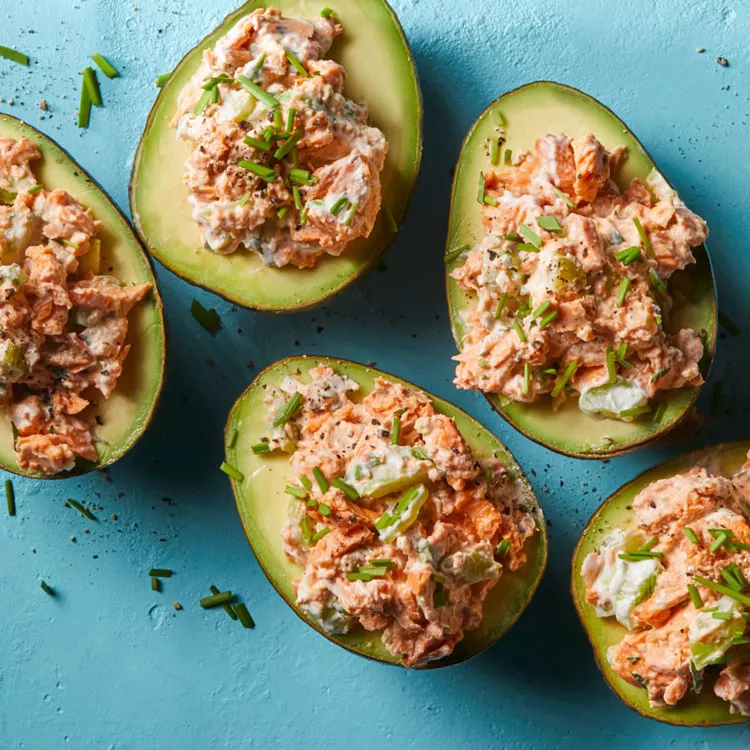
Canned salmon is a valuable pantry staple and a practical way to include heart-healthy, omega-3-rich fish in your diet. Here, we combine it with avocados in an easy no-cook meal.
Ingredients
½ cup nonfat plain Greek yogurt
½ cup diced celery
2 tablespoons chopped fresh parsley
1 tablespoon lime juice
2 teaspoons mayonnaise
1 teaspoon Dijon mustard
⅛ teaspoon salt
⅛ teaspoon ground pepper
2 (5 ounce) cans salmon, drained, flaked, skin and bones removed
2 avocados
Chopped chives for garnish
Directions
Combine yogurt, celery, parsley, lime juice, mayonnaise, mustard, salt, and pepper in a medium bowl; mix well. Add salmon and mix well.
Halve avocados lengthwise and remove pits. Scoop about 1 tablespoon flesh from each avocado half into a small bowl. Mash the scooped-out avocado flesh with a fork and stir into the salmon mixture.
Fill each avocado half with about 1/4 cup of the salmon mixture, mounding it on top of the avocado halves. Garnish with chives, if desired.
Nutrition Facts (per serving)
293 Calories 20g Fat 11g Carbs 23g Protein
| Nutrition Facts | |
|---|---|
| Servings Per Recipe 4 | |
| Serving Size 1/2 avocado and 1/4 cup salmon salad | |
| Calories 293 | |
| % Daily Value * | |
| Total Carbohydrate 11g | 4% |
| Dietary Fiber 7g | 25% |
| Total Sugars 2g | |
| Protein 23g | 45% |
| Total Fat 20g | 25% |
| Saturated Fat 3g | 15% |
| Cholesterol 61mg | 20% |
| Vitamin A 413IU | 8% |
| Vitamin C 14mg | 16% |
| Folate 94mcg | 24% |
| Sodium 400mg | 17% |
| Calcium 94mg | 7% |
| Iron 1mg | 6% |
| Magnesium 52mg | 12% |
| Potassium 807mg | 17% |
Nutrition information is calculated by a registered dietitian using an ingredient database but should be considered an estimate.
* Daily Values (DVs) are the recommended amounts of nutrients to consume each day. Percent Daily Value (%DV) found on nutrition labels tells you how much a serving of a particular food or recipe contributes to each of those total recommended amounts. Per the Food and Drug Administration (FDA), the daily value is based on a standard 2,000 calorie diet. Depending on your calorie needs or if you have a health condition, you may need more or less of particular nutrients. (For example, it’s recommended that people following a heart-healthy diet eat less sodium on a daily basis compared to those following a standard diet.)
(-) Information is not currently available for this nutrient. If you are following a special diet for medical reasons, be sure to consult with your primary care provider or a registered dietitian to better understand your personal nutrition needs.
2. Kale & White Bean Potpie with Chive Biscuits
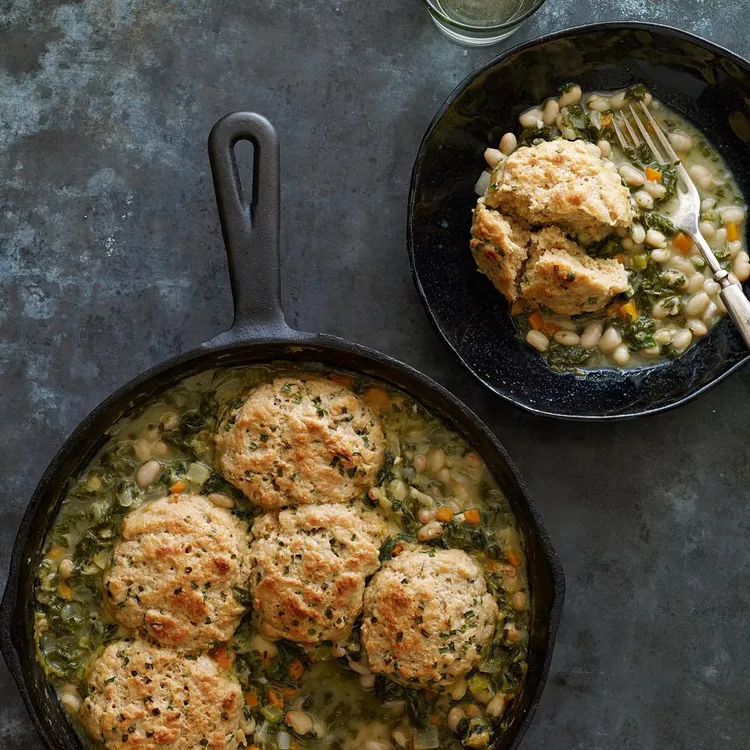
In this vegetarian white bean potpie recipe, kale and hearty white beans are topped with easy, homemade chive biscuits. If desired, add a little shredded Gruyère or Cheddar cheese to the biscuit dough.
Ingredients
2 tablespoons extra-virgin olive oil plus 2 teaspoons, divided
1 cup chopped onion
½ cup chopped carrot
½ cup chopped celery
3 cloves garlic, minced
2 teaspoons chopped fresh thyme or 3/4 teaspoon dried
1 teaspoon chopped fresh rosemary or 1/4 teaspoon dried
8 cups chopped kale (1 small-to-medium bunch)
¼ cup white whole-wheat flour
3 cups low-sodium vegetable broth or no-chicken broth
1 15-ounce can white beans, rinsed
½ teaspoon kosher salt
½ teaspoon ground pepper
1 cup white whole-wheat flour (see Tip)
1 teaspoon baking powder
¼ teaspoon baking soda
¼ teaspoon kosher salt
¼ teaspoon ground pepper
3 tablespoons cold butter, cut into small pieces
3 tablespoons minced fresh chives
½ cup cold buttermilk
Directions
Preheat oven to 350 degrees F. Coat a 10-inch cast-iron skillet (or similar-size 2-quart baking dish) with cooking spray.
Heat 2 tablespoons oil in a large pot over medium heat. Add onion, carrot and celery and cook, stirring occasionally, until the vegetables are soft, 4 to 6 minutes. Add garlic, thyme and rosemary; cook, stirring, until fragrant, about 30 seconds. Add kale; cook, stirring often, until tender and wilted, 3 to 5 minutes. Sprinkle with 1/4 cup flour and cook, stirring, for 30 seconds. Stir in broth, increase heat to high and bring to a boil. Reduce heat to a simmer and cook, stirring, until thickened, about 2 minutes. Stir in beans and 1/2 teaspoon each salt and pepper. Transfer the mixture to the prepared pan.
To prepare biscuits: Whisk flour, baking powder, baking soda, salt and pepper in a large bowl. Using a pastry blender or your fingertips, cut or rub butter into the dry ingredients. Stir in chives. Add buttermilk and stir until just combined. Form the dough into 6 biscuits and place on top of the vegetable mixture. Lightly brush with the remaining 2 teaspoons oil. Place the potpie on a baking sheet.
Bake until the biscuits are lightly browned and the filling is bubbling, about 30 minutes. Let cool 5 minutes before serving.
Tip
Try white whole-wheat flour in place of all-purpose flour in baked goods. It’s made from hard white wheat berries, which makes it lighter in color and flavor than regular whole-wheat flour, but with the same nutritional properties. Look for it near other whole-grain flours. For the best flavor, store it airtight in the freezer.
Cut down on dishes: A rimmed baking sheet is great for everything from roasting to catching accidental drips and spills. For effortless cleanup and to keep your baking sheets in tip-top shape, line them with a layer of foil before each use.
To make ahead
Prepare through Step 2; refrigerate for up to 1 day. Let stand at room temperature for 30 minutes before finishing.
Nutrition Facts (per serving)
| 277 | Calories |
| 13g | Fat |
| 37g | Carbs |
| 9g | Protein |
| Nutrition Facts | |
|---|---|
| Servings Per Recipe 6 | |
| Serving Size about 1 1/4 cups filling & 1 biscuit | |
| Calories 277 | |
| % Daily Value * | |
| Total Carbohydrate 37g | 13% |
| Dietary Fiber 8g | 28% |
| Total Sugars 5g | |
| Protein 9g | 18% |
| Total Fat 13g | 16% |
| Saturated Fat 5g | 24% |
| Cholesterol 16mg | 5% |
| Vitamin A 4222IU | 84% |
| Vitamin C 31mg | 34% |
| Folate 92mcg | 23% |
| Sodium 550mg | 24% |
| Calcium 162mg | 12% |
| Iron 5mg | 27% |
| Magnesium 20mg | 5% |
| Potassium 457mg | 10% |
Nutrition information is calculated by a registered dietitian using an ingredient database but should be considered an estimate.
* Daily Values (DVs) are the recommended amounts of nutrients to consume each day. Percent Daily Value (%DV) found on nutrition labels tells you how much a serving of a particular food or recipe contributes to each of those total recommended amounts. Per the Food and Drug Administration (FDA), the daily value is based on a standard 2,000 calorie diet. Depending on your calorie needs or if you have a health condition, you may need more or less of particular nutrients. (For example, it’s recommended that people following a heart-healthy diet eat less sodium on a daily basis compared to those following a standard diet.)
(-) Information is not currently available for this nutrient. If you are following a special diet for medical reasons, be sure to consult with your primary care provider or a registered dietitian to better understand your personal nutrition needs.